In the last two years, most of us have integrated AI into our everyday life, but what aspects has AI enhanced about us? Productivity, imagination, advice, addiction? According to statista, the market size of AI is projected to reach USD$244bn in 2025, and is expected to show an annual growth rate (CAGR 2025-2031) of 26.6%, resulting in a market volume of US$1T by 2031.

This chart is the % Change from previous quarter of Non-farm Labor productivity. As we can see, we haven't seen yet a big productivity expansion like in the internet era ( mid90s and 00s).
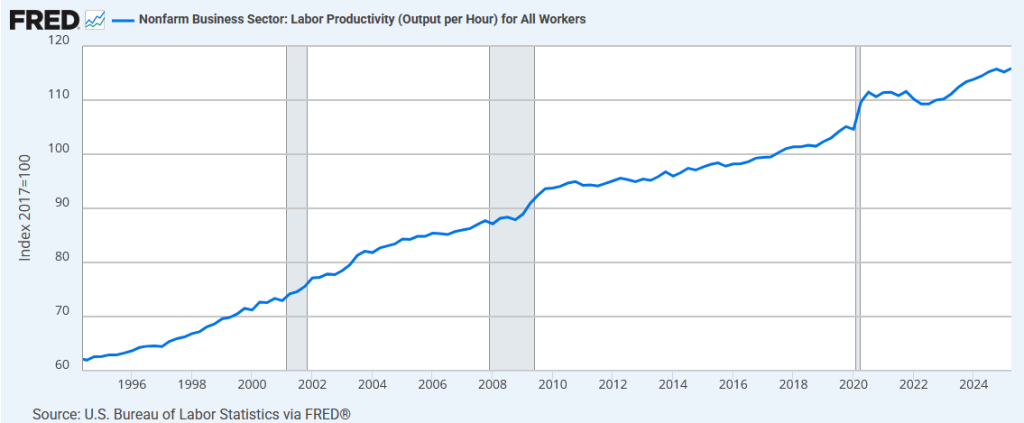
Since ChatGPT launched in Q4 2022, labor productivity (output per hour) increased by 5.5% (below 2% annually). Let's take a look at the internet. The mainstream adoption started between 1995 and 1998. After that we can see an explosion in productivity (averaging 2.27% anually from Q1 1995 till Q1 2000 and 3.3% till Q1 2010). According to Nvidia's CFO, Microsoft processed over 100T tokens in Q1 2025, 5x more than Q1 2024. Google's CEO said monthly tokens produced across Google's products had increased by a factor of 50 in the last year. AI is still poor at automating things and many companies are forcing their employees to use AI, but there are no proper workflows or indications on how to use it in an efficient way.
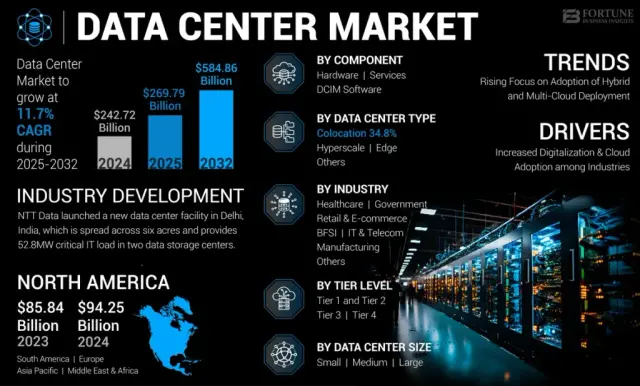
According to various forecasts, Data center market is set up to keep growing double-digit rates for many years. The bet on generative AI is at its peak, but we haven't seen results yet. Is the hype justified or are we in a similar late 90s & Dotcom period? Personally, we haven't seen the true potential of this so-called disruptive technology. Internet created 4 jobs for every job destroyed, and AI was supposed to destroy a lot more than internet did. But, for the moment, we haven't seen a significant change. This time is pretty different anyways. In the late 90s, US was running budget surplus and tech capital allocation was made mostly by private markets and corporate profitability. Now the US is in a persistent fiscal deficit with state-backed industrial policies that can sustain AI development regardless of ROI. Government is a direct consumer of AI, especially in defense and intelligence (i.e Palantir). Nowadays, AI ventures have guaranteed funding and demand, independently from consumer app adoption and enterprise AI productivity gains. Let's see at asset price implications for this view: First of all, SaaS & IT service companies' margins will collapse due to various factors: Not having their own infrastructure and not owning proprietary models. AI agents will end up developing high-grade code and apps anyway and most enterprise software will become a commodity: cheap, easily replicated and will no longer be differences between companies. Consumer demand can be very cyclical, while defense AI contractors and governments are a stable source of funding. AI labs, defense AI, datacenters will keep having sustained funding from defense and government budgets without taking into consideration token consumption. The power shifts to whoever controls AI models and not whoever is using them. AI is not meant to be good, but to be addictive (Right now). Historically, betting against the human always led positive returns (betting, casinos, drugs, sugar, social media). It's no surprise that AI is the new addiction and AI companies know that.
AI is a double-edged sword. It might help you do things quicker, easier, help you learning or improving yourself. But It could gradually lower your brain activity, hinder deep learning and critical thinking, according to MIT (source: https://arxiv.org/abs/2506.08872). Critical thinking will be a very valuable asset if you can escape from the addiction era. Technology has doomed humans for ever. AI will enhance this situation due to making extremely addictive consuming content like games, videos, films, shorts, VR, whatever you could think about due to hyperfocused entertainment for every person. Just look around. Videogames addiction, buying addiction through Amazon or Temu, drugs, social media, AI content.